
As businesses in Sydney seek energy-efficient, space-saving, and flexible HVAC solutions, VRF (Variable Refrigerant Flow) air conditioning systems have become a popular choice. These systems provide precise climate control across large and complex buildings, improving both comfort and operational efficiency.
But when deciding between the two main types of VRF systems – water-cooled and air-cooled – which one is the best fit for your commercial property? In this blog, we’ll compare both systems, examine their unique benefits, and explain when each is the ideal solution for your building’s needs.
What is VRF? (The Simple Explanation)
A VRF system is a more efficient way of managing air conditioning. Unlike traditional systems that are either on or off, VRF technology adjusts the refrigerant flow to match the exact needs of each room. This means you can cool a room that’s in direct sunlight while simultaneously heating a shaded office, using only the energy needed for each space.
Water-Cooled vs. Air-Cooled VRF: Which Fits Your Building?
When choosing between water-cooled and air-cooled VRF systems, the best option depends on your building’s layout, energy goals, and budget.
Water-Cooled VRF: A More Efficient Option for Larger Buildings
Water-cooled VRF systems use a loop of water, often connected to a cooling tower or boiler, to manage heat exchange. These systems are best suited for:
- High-rise buildings, large campuses, or heritage properties that don’t have room for large outdoor fans.
Advantages:
- Energy efficiency: Water-cooled systems transfer heat more effectively, meaning lower utility bills during Sydney’s summer heat.
- Space-saving: Water-cooled VRF systems can be installed in internal plant rooms, freeing up valuable rooftop space.
- Quiet operation: With no large outdoor fans, these systems operate more quietly, making them ideal for noise-sensitive environments.
Real-World Example:
At the University of Wollongong Sydney Campus in Darling Park Tower 1, PSB Air installed a water-cooled VRF system that delivers multi-zone heating and cooling across Levels 2 and 3. This system helped meet the university’s sustainability goals while keeping energy use in check.
Air-Cooled VRF: A Cost-Effective, Flexible Choice for Smaller Buildings
Air-cooled VRF systems use ambient outdoor air to cool the refrigerant. These systems are easier to install and maintain, making them a good option for mid-sized offices, retail stores, and multi-purpose buildings.
Advantages:
- Lower installation cost: With a simpler design, air-cooled VRF systems are generally more affordable to install.
- Simpler maintenance: Without the need for water treatment or cooling towers, air-cooled systems are easier to maintain in the long term.
- Versatile performance: These systems perform well during Sydney’s shoulder seasons (Spring and Autumn) when outdoor air temperatures are moderate.
Real-World Example:
For the Moss Vale Civic Centre, PSB Air installed an air-cooled VRF system as part of a refurbishment project. The system improved comfort across public spaces without needing a significant structural overhaul.
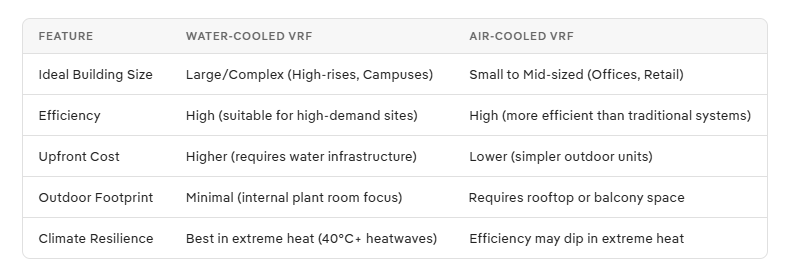
Key Differences Between Water-Cooled and Air-Cooled VRF Systems
When to Choose Water-Cooled VRF?
Water-cooled VRF systems are ideal for:
- Larger buildings or high-rise structures like campuses or hospitals in Sydney, where energy efficiency and space are a priority.
- Buildings with limited outdoor space for outdoor units.
- Sustainability-focused projects, where long-term energy savings are important.
When to Choose Air-Cooled VRF?
Air-cooled VRF systems are suitable for:
- Smaller commercial fitout properties, such as retail spaces, small offices, or multi-purpose civic buildings.
- Businesses on a tight budget or those needing a cost-effective installation option.
- Mid-sized buildings that don’t require the complex infrastructure of water-cooled systems.
Conclusion:
Choosing the right VRF system depends on your building’s size, energy goals, and available space. Water-cooled VRF systems are best for larger, multi-storey buildings where space is limited and energy efficiency is key. Air-cooled VRF, on the other hand, is a practical, cost-effective solution for smaller commercial properties that don’t have the same energy demands or space restrictions.
At PSB Air, we specialise in providing tailored VRF solutions that meet your building’s unique needs. Contact us today to schedule a consultation and find the best system for your property.