Industrial HVAC systems are essential in manufacturing facilities, control buildings and other environments where temperature, air quality and equipment performance can directly affect operations. Unlike standard comfort-conditioning systems, industrial HVAC solutions need to be designed around the facility, the spaces being served, the equipment within them and the conditions of the site.
Many of the same principles also apply to complex commercial projects, where HVAC systems need to respond to different building layouts, occupant requirements and operational demands.
The BlueScope Steel Main Control Building project at Port Kembla Steelworks provides a practical example of the planning and engineering involved in delivering HVAC systems for a demanding industrial environment.
What Makes Industrial HVAC Systems Different?
Industrial HVAC systems are designed around the needs of the facility they serve. While a standard commercial building may primarily focus on occupant comfort and indoor air quality, industrial environments can have additional considerations around equipment, processes and site conditions.
Control rooms, switch rooms and technical spaces may require stable temperature conditions to support the equipment operating within them. Some facilities also operate continuously, placing greater demands on the mechanical systems.
The design therefore needs to consider:
- Environmental control: Maintaining appropriate conditions within technical and operational spaces.
- Equipment requirements: Providing suitable cooling for spaces containing sensitive electrical or mechanical equipment.
- Site conditions: Selecting equipment and materials appropriate for the physical and environmental conditions of the site.
- Ongoing operation: Considering access, maintenance and system performance over the life of the equipment.
These considerations need to be addressed during the design process rather than after installation has begun.
The Role of Central Plant Systems in Large Facilities
Large industrial and commercial facilities can utilise central plant systems to provide controlled cooling across multiple areas of a building.
A central plant may incorporate equipment such as cooling towers, pumps and condenser water systems, with the different components working together as part of the wider HVAC system.
For the BlueScope Steel Main Control Building, PSB Air delivered a complete Design & Construct mechanical package incorporating:
- Condenser water central plant system
- Closed-circuit cooling towers
- Condenser water pumps and associated pipework
- Water-cooled CRAC (Computer Room Air Conditioning) units
- Water-cooled VRF air conditioning systems
- Air purification systems
- Building Management System (BMS) coordination and controls integration
The system was designed around the building’s operational areas, including control rooms, switch rooms and technical spaces.
Maintaining Environmental Control in Technical Spaces
Different areas within an industrial facility can have very different HVAC requirements.
Control rooms, electrical spaces and other technical areas can contain equipment that requires stable environmental conditions. Maintaining appropriate temperature and air quality helps provide a suitable environment for these spaces.
The project incorporated water-cooled CRAC units, water-cooled VRF air conditioning systems and air purification systems to provide environmental control throughout the building.
The selection of a water-cooled VRF system depends on factors such as zoning requirements, available plant space, building infrastructure and the way the facility will operate. PSB Air has previously explored the differences between water-cooled and air-cooled VRF systems in more detail.
The Importance of BMS Integration in Industrial HVAC Systems
Modern HVAC systems rely on controls and monitoring to manage equipment and understand how systems are performing.
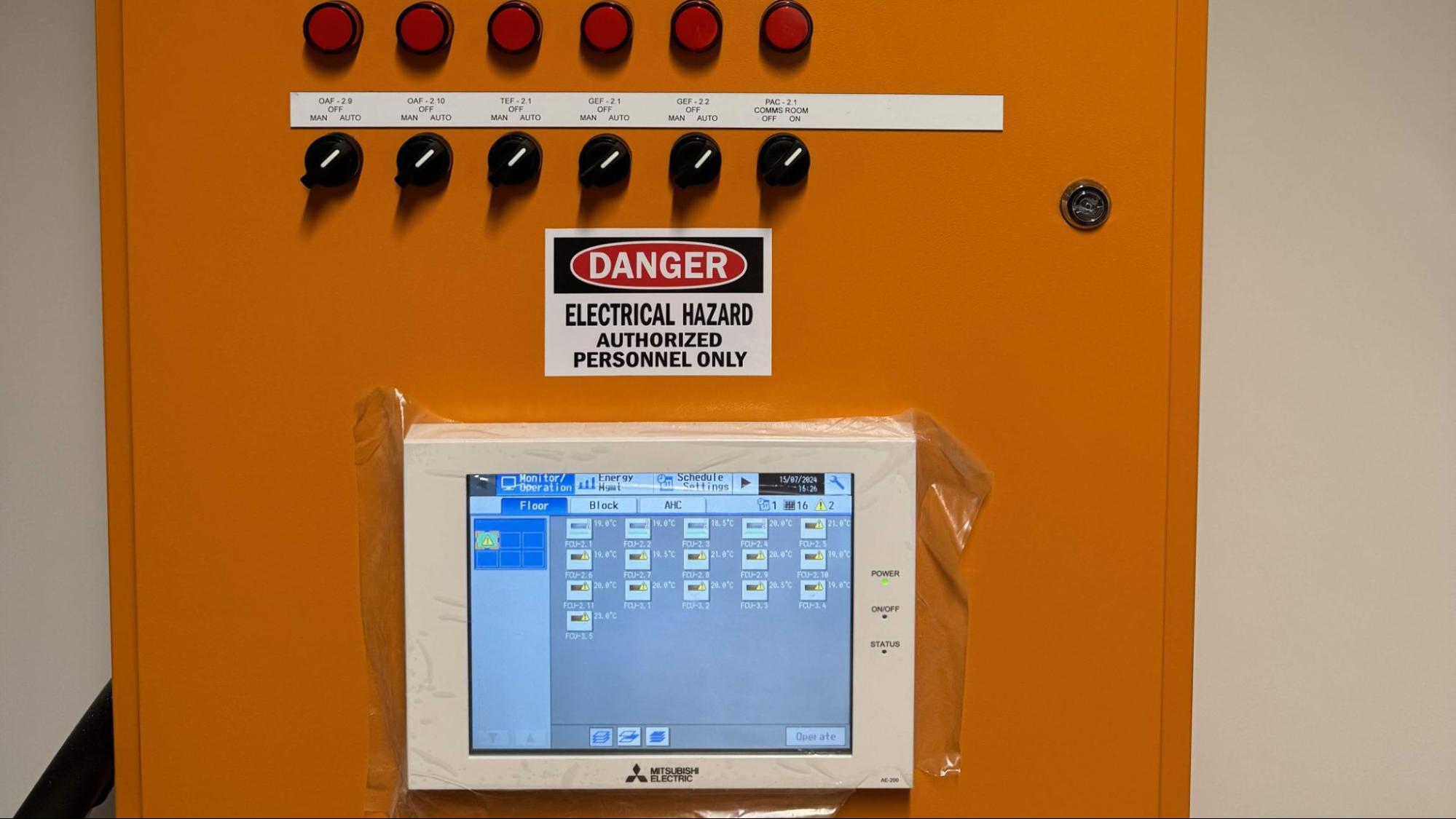
A Building Management System (BMS) allows mechanical equipment to be monitored and controlled through a central platform. This provides visibility into system operation, alarms, equipment status and performance. For more information, see our article on BMS integration in commercial HVAC projects.
For complex facilities, BMS integration can help operators manage multiple mechanical systems and identify issues that may otherwise be difficult to detect.
For this project, PSB Air worked closely with the BMS contractor to coordinate the integration of major mechanical plant items, allowing the HVAC systems to communicate with the wider building controls infrastructure.
Engineering for the Site Environment
The environment in which an HVAC system operates can influence the equipment and materials selected during design.
This was an important consideration at Port Kembla Steelworks, where the Main Control Building is exposed to both coastal and industrial conditions.
During the design process, PSB Air identified the potential corrosion risks associated with the originally proposed cooling tower construction materials. The team recommended stainless steel construction cooling towers as a more suitable option for the site conditions.
By addressing the environmental conditions during design, the project team was able to select equipment with greater consideration for long-term durability and future maintenance.
This is an important part of HVAC design. The right equipment is not necessarily the same for every building. The location, operating environment and intended use of the system all need to be considered.
Coordination, Testing and Commissioning
Complex HVAC projects involve more than the installation of mechanical equipment. Mechanical systems need to be coordinated with electrical services, controls, building infrastructure and other trades working on the project.
For this project, PSB Air’s scope included:
- Testing, Adjusting and Balancing (TAB)
- Mechanical switchboards and controls
- BMS coordination
- Commissioning
- Performance verification
Testing and commissioning provide an opportunity to confirm that equipment and systems are operating as intended before the facility is handed over.
This process is particularly important where multiple mechanical systems need to work together as part of a larger building infrastructure.
What the BlueScope Steel Project Demonstrates
The BlueScope Steel Main Control Building illustrates how HVAC design needs to respond to the specific conditions and operational requirements of an industrial facility.
The project demonstrates three important considerations:
- Design around the environment: The coastal and industrial conditions at Port Kembla influenced the selection of cooling tower construction materials.
- Design around the spaces: Control rooms, switch rooms and technical areas required carefully considered environmental control.
- Design around the wider system: Central plant, CRAC units, VRF systems, controls and commissioning all needed to work together as part of the building’s mechanical infrastructure.
The project illustrates how HVAC design and installation can be considered as part of the wider facility rather than as a standalone air conditioning installation.
PSB Air applies this same approach to new building projects, working with project teams to coordinate HVAC systems from design through to installation and commissioning.
Frequently Asked Questions About Industrial HVAC Systems
What is an industrial HVAC system?
An industrial HVAC system is a heating, ventilation and air conditioning solution designed for facilities with specialised operational requirements. These systems may need to support technical equipment, maintain specific environmental conditions and operate reliably within demanding environments.
How are industrial HVAC systems different from commercial HVAC systems?
Industrial HVAC systems are often designed around equipment, processes and site conditions, while commercial HVAC systems generally place greater emphasis on occupant comfort, indoor air quality and building use. Some facilities require a combination of both, particularly control buildings and technical spaces within industrial sites.
What is a central plant HVAC system?
A central plant HVAC system uses centralised mechanical equipment, such as cooling towers, pumps and condenser water systems, to provide cooling across multiple areas of a facility. The configuration will depend on the building, cooling requirements and operating conditions.
Why is BMS integration important for HVAC systems?
BMS integration allows HVAC equipment to be monitored and controlled through a central system. This can provide greater visibility of equipment operation, alarms and system performance, while helping operators manage complex mechanical systems.
What HVAC solutions are used in critical facilities?
The appropriate solution depends on the facility and its operational needs. Systems can include central plant, cooling towers, CRAC units, VRF air conditioning, air purification and BMS controls. The design needs to consider the spaces being served, equipment requirements and conditions of the site.
Planning an Industrial or Commercial HVAC Project?
If you are planning a commercial or industrial project that requires a carefully coordinated HVAC solution, PSB Air can work with your project team from design through to installation and commissioning.
Talk to PSB Air about your next project.